Bali does not have overwater bungalows. The famous "floating" villas there are pool villas on land, and the real thing sits 1,400 km away or further. Indonesia has three genuine stilted resorts – Bawah Reserve in the Anambas Islands, and two dive lodges in Raja Ampat – from around $300 a night. None of them has a private pool, and only one is bookable through the usual channels.
Booking for live prices · Review for our take
| Hotel | Rating | From/night | Area | Best for | |
|---|---|---|---|---|---|
| Papua Paradise Eco Resort | Superb | ~$300 full board | Birie Island, Raja Ampat · via Sorong (SOQ) | Best overall · cheapest by far · manta cleaning stations on the house reef | Review ↓ |
| Bawah Reserve | Books direct | $2,650 AI | Anambas Islands, Riau · seaplane from Batam or Singapore | Most luxurious · 105 sqm bungalows · 11 units · mandatory seaplane | Review ↓ |
| Misool Resort | Books direct | ~$1,500 AI | Batbitim Island, south Raja Ampat · seaplane from Sorong | Most remote · inside a private 300,000-acre marine reserve | Review ↓ |
Worth knowing before you compare: only Papua Paradise is listed on the usual booking sites – Bawah and Misool both take reservations directly with the resort, and neither has a public guest score as a result.
Which Indonesia overwater bungalow should you book?
Book Papua Paradise Eco Resort. It's the cheapest by a wide margin at around $300 a night full board, against $1,500 and $2,650 for the other two, and the only one of the three with a verified guest rating – a strong one. Its bungalows stand on stilts above the house reef, which has manta ray cleaning stations on it.
Check Papua Paradise dates – it's also the only one of the three you can book here rather than by email.
Two alternatives, both genuinely different trips. If the budget is open and you want the most polished version of this: book Bawah Reserve, 11 bungalows on a private Anambas lagoon. If you want the most remote and most conservation-driven stay in the country: book Misool, inside its own marine reserve. Both are direct with the resort.
| Your trip | Book | Where | The trade-off |
|---|---|---|---|
| Best value, diving, verified rating | Papua Paradise Eco Resort | Raja Ampat | An 8–10 hour journey via Sorong |
| The most luxurious, and the easiest to reach | Bawah Reserve | Anambas Islands | Seaplane transfer costs more than a night's stay |
| The most remote, inside a marine reserve | Misool Resort | South Raja Ampat | Minimum stay required, capacity capped |
Papua Paradise Eco Resort
This is the one to book, and the price is only half the reason. At around $300 a night full board it's a fraction of what the other two charge, and it's the only property here with an independently verified guest score – because it's the only one listed on the mainstream booking sites. Everything else in Indonesian overwater is a leap of faith by comparison.
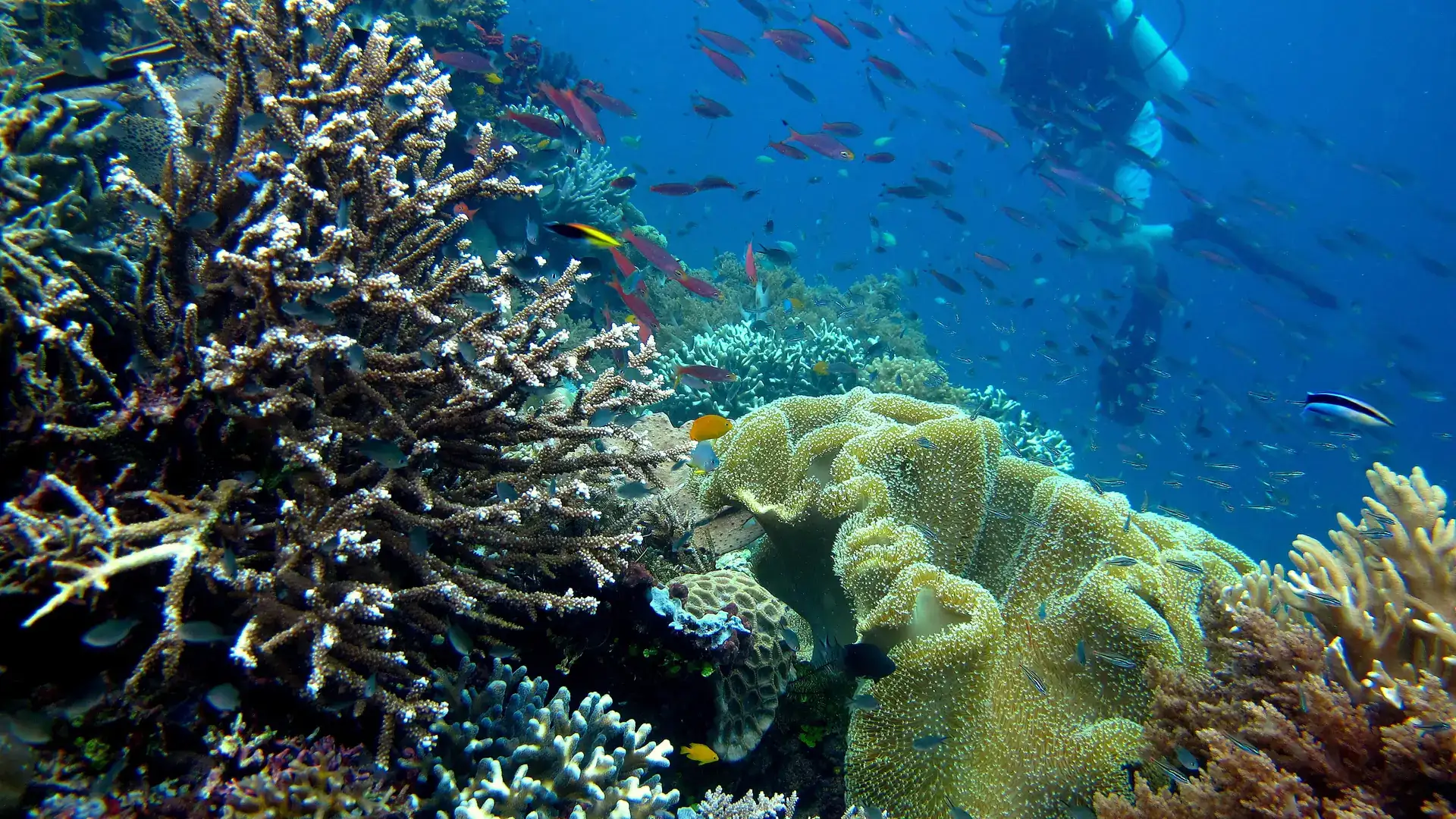
The bungalows sit on stilts over the house reef off Birie Island in Raja Ampat, across 25–26 units in Superior, Deluxe and Premier categories. None has a pool – you swim off the deck straight into the reef, which is rather the point. Manta ray cleaning stations sit on the house reef itself, so the marquee dive of the trip can happen without a boat.
Set your expectations on the journey, not the room. Reaching it takes 8–10 hours or more from most gateways, routed through Sorong (SOQ), and this is a dive resort rather than a spa retreat. Book this one if the reef is why you're going. Check Papua Paradise availability now – it's the pick most readers of this guide should hold.
Bawah Reserve
Bawah is the most photographed overwater property in Indonesia and the reason so many people believe Bali has bungalows – it ranks at the top for exactly that search while sitting 1,400 km from Bali, in the Anambas Islands off Riau.
The room is genuinely luxurious. The Overwater Bungalow runs 105 sqm, one of only 11 units, on stilts above a sheltered lagoon with a sundeck that drops straight into the water. There's no private pool – you swim from the deck.
The all-inclusive rate covers meals, land and sea activities, spa treatments, WiFi and laundry, and runs $2,650 a night in standard season, rising to $3,020 at peak. Minimum age is 13, so it skews adult in practice.
Then there's the transfer, which is mandatory and not a rounding error. The seaplane runs roughly $850 per person round trip from Batam, or around $1,000-plus from Singapore before a fuel surcharge that pushes it closer to $1,150. Budget it as part of the trip, not an extra.
Book this one if you want the most polished overwater stay in Indonesia and the transfer cost doesn't change the decision. Check Bawah Reserve – reservations go direct with the resort.
Misool Resort
Misool is the most remote stay on this page and the one with a purpose beyond the room. It sits on Batbitim Island in southern Raja Ampat, reached by seaplane or liveaboard from Sorong, inside a private 300,000-acre marine reserve run by the Misool Foundation – the resort and the protected area are the same project.
The Water Cottage and Lagoon Villa stand on stilts over a reef-filled private lagoon. As everywhere in Indonesian overwater, there's no pool – the lagoon is the pool. Rates start around $1,500 a night all-inclusive, there's a minimum-stay requirement, and capacity is deliberately capped, so this is a plan-ahead booking.
What you get for the remoteness is water almost nobody else is in, and a stay whose economics fund the reserve around it. Book this one if the conservation story and genuine isolation are what you're buying. Check Misool Resort – also direct with the resort.
At Bawah Reserve the seaplane isn't optional and isn't cheap: roughly $850 per person round trip from Batam, or around $1,000-plus from Singapore before a fuel surcharge that takes it near $1,150. For two people that's more than a night's stay, on top of a $2,650 rate. Price the transfer in before you compare Bawah with anything else here.
Why Indonesia's overwater bungalows are nowhere near Bali
The search demand is all in Bali and the supply is nowhere near it. That gap isn't marketing – it's geology.
Bali's coast is volcanic and surf-exposed, with no sheltered reef lagoon to build a stilted bungalow over. What Bali has instead are pool villas on land, some of them spectacular, none above open water. The lagoons Indonesia does have are in the Anambas and Raja Ampat, which is exactly where all three genuine resorts sit – and both are 8 to 10 hours or more from the usual gateways.
That single fact reshapes the category here. In Indonesia, an overwater bungalow is a diving decision rather than a honeymoon shortcut – and it's why none of these three has a private pool. Where the Maldives sells a plunge pool on the deck, these resorts sell the water underneath it: you swim off the sundeck into a reef, so a pool would be a downgrade with extra steps.
It also explains the price spread. The cheapest is a dive lodge, the most expensive a reserve you reach by seaplane – they aren't competing, they're different trips.
Elsewhere in the region, Malaysia has the same dive-versus-luxury split at shorter range, the Philippines concentrates everything on one island, Thailand is the cheapest and easiest to reach, and the Maldives is where the private pool became standard – all measured by the same stilts-or-nothing test as the overwater bungalows hub.
When to go
Indonesia's two overwater regions run on opposite calendars, so there's no single answer here.
Bawah Reserve in the Anambas is best from March to October, once the northeast monsoon has passed. November to February brings stronger swells and seaplane disruption – a real consideration when the transfer is a flight onto water. Demand peaks March to August.
Raja Ampat inverts it: October to April is the dry season, with the calmest seas and best underwater visibility for Papua Paradise and Misool. October–November and March–April are the shoulder windows, and May to September is wet, with reduced dive schedules.
Temperature won't decide anything. Both regions sit near the equator at 28–32°C year-round – rainfall and sea state are the variables that matter, not the thermometer.
FAQ
Images: Rizalubun / Wikimedia Commons / CC BY-SA 4.0