Only a few hundred dugongs are thought to remain in Egyptian waters, and the shallow seagrass bays around Marsa Alam are among the handful of places anywhere that snorkelers encounter them at all. That is the appeal and the caveat in a single sentence: it is a genuinely rare animal, which is exactly why a sighting cannot be promised. What the trip does guarantee is two guided snorkeling stops over the seagrass they feed on.
What you are actually looking for
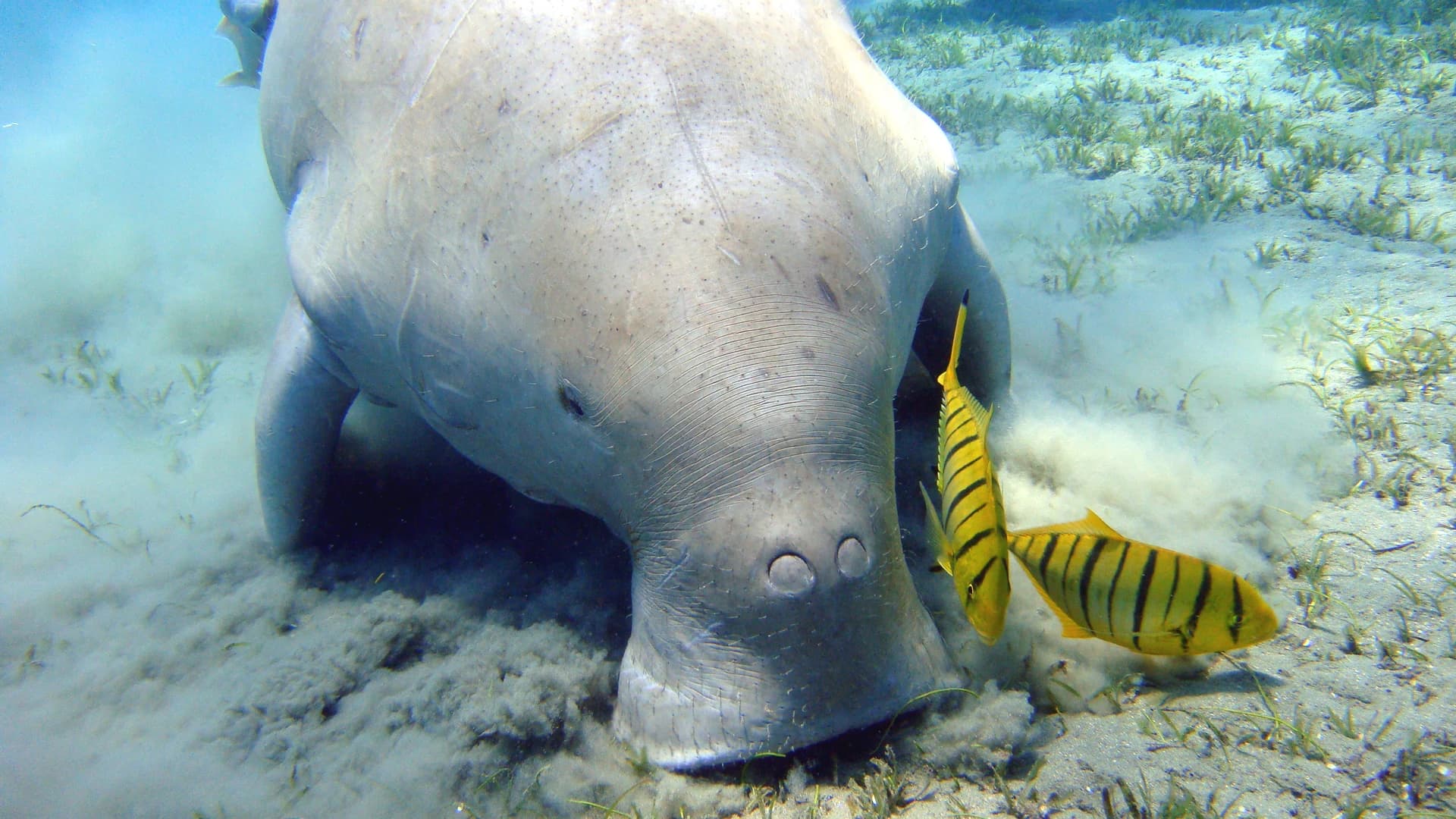
A dugong is a large, slow marine mammal that grazes seagrass on shallow sandy bottoms – the animal behind the "sea cow" name and, distantly, behind old sailors' mermaid stories. They feed head-down in the seagrass, leaving visible grazing trails in the sand, which is how guides find them.
Dugongs are listed as Vulnerable globally by the IUCN, and the Red Sea population is small and thinly spread. Published research on the Egyptian coast describes a low-density population running to a few hundred animals at most, scattered across the bays – the "marsas" – that give this coastline its name.
The stretch of coast south of Marsa Alam is recognized as an Important Marine Mammal Area, and several bays along it have been identified as likely dugong nursery grounds. This is a real wildlife site, not a marketing construct. It is also, for the same reason, one where the animal is scarce.
Turtles are the sighting you will probably get
Here is the expectation management no listing will give you. Green sea turtles are common at Marsa Mubarak and dugongs are not, and the honest way to book this trip is as a turtle-and-seagrass snorkel with a rare mammal as the upside.
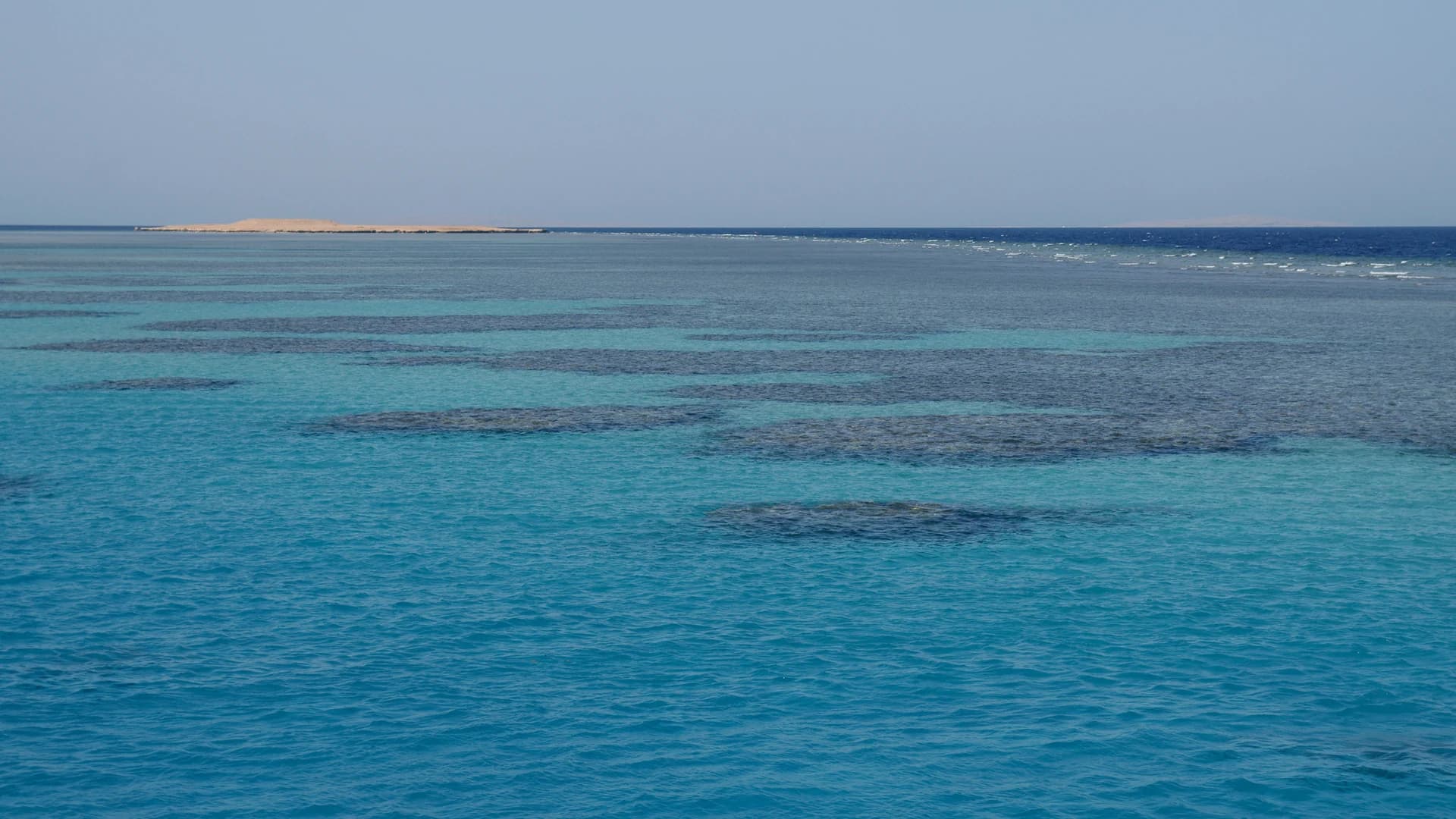
The same shallow seagrass meadows that feed dugongs feed turtles, and turtles are far more numerous. Most people who come back happy from this trip saw turtles at close range, snorkeled clear shallow water over seagrass, and either did or did not also see a dugong.
Book it on that basis and the trip is good value. Book it expecting a dugong and you are buying a lottery ticket at £50 a go.
Where the 4.5 hours actually go
This is a half-day trip and less of it is in the water than the duration suggests. Worth knowing before you book.
| Segment | Roughly |
|---|---|
| Bus transfer from your hotel | 1 hour |
| Sailing to Marsa Mubarak | 30 minutes |
| Snorkeling, wildlife watching, deck time | 2.5 hours |
| Sailing to Port Ghalib marina | 30 minutes |
| Guided marina tour and shopping | 40 minutes |
Two guided snorkeling stops are included – Marsa Mubarak itself and Small Shenwa – along with an expert snorkeling guide and an open buffet lunch or dinner depending on your departure.
Non-swimmers cannot do this one
Unusually blunt for a listing, and worth repeating. The operator names non-swimmers and people prone to seasickness as unsuitable for this trip.
That is a meaningful restriction on this coast, because Marsa Alam has no semi-submarine or glass-deck alternative of the kind Hurghada and Sharm both run. There is no dry version of this experience here. If someone in your party will not be getting in the water, the wildlife day is not going to work for them, and that is worth resolving before you book rather than at the marina.
No minimum age is published. Given the swimming requirement, treat small children as a conversation to have with the operator directly.
Do not touch, and do not chase
The single rule that matters around dugongs, and the one that determines whether anyone sees them next season.
A grazing dugong that is crowded or followed stops grazing and leaves. Guides on these trips keep groups at a distance and above the animal rather than around it, and the correct behavior is to float still on the surface and let it feed. Touching marine life is prohibited on Red Sea wildlife trips generally.
This is not only ethics – it is self-interest. The encounters people describe as extraordinary are the ones where the animal stayed because nobody crowded it.
When to go
September through May is Red Sea high season, and Marsa Alam stays warm later into the autumn than the resorts further north. Winter is dry and mild, and the charter flights from northern Europe run right through it.
For this trip specifically, flat water matters more than time of day. Spotting a grey animal grazing on a seagrass bottom depends on surface conditions and light penetration, and a choppy afternoon makes it substantially harder. A calm morning is the booking to want.
Check dates and availability before you close this page – Marsa Alam runs far fewer boats than the big resorts, and half-day wildlife trips here sell out rather than simply filling up.
Dugongs or dolphins?
| Marsa Mubarak dugongs | Shaab Samadai dolphins | |
|---|---|---|
| The day | 4.5 hours, half-day | 7 hours, full day |
| Roughly | ~£50 per person | ~£58 per person |
| The animal | Rare, low-density population | A pod that reliably uses one reef |
| Fallback if nothing appears | Turtles and seagrass snorkeling | A protected-reef snorkel |
| Guaranteed? | No | No |
If you can only do one, the dolphin trip has the better odds – Samadai is a site the pod actually rests in, whereas dugongs are scattered thinly along the whole coast. If you want the rarer animal and a shorter day, this is the one.
Doing both across a few days is the obvious move if Marsa Alam is your base, and they are genuinely different experiences rather than two versions of a wildlife boat trip.
If you are comparing Red Sea resorts rather than trips, note that Marsa Alam trades variety for specificity: Hurghada's 3 Islands day covers far more ground for less money, but nothing on that coast offers a dugong. Our water activities index covers the other destinations we write about.
FAQ – dugong snorkeling in Marsa Alam
Images: Julien Willem / Wikimedia Commons / CC BY-SA 3.0