Underneath Tulum runs one of the largest flooded cave systems on Earth, and a cenote is simply a place where the limestone roof fell in and let the daylight down to it. That is the whole appeal – cool fresh water at around 25°C year-round, no waves, no salt, no season. What varies enormously is what a "cenote tour" actually sells you, and the cheapest option is often a day pass rather than a tour.
What a cenote actually is
The Yucatán has no rivers. Rain drains straight through porous limestone into a vast freshwater aquifer, and over millennia that water carved caves. Where a cave roof collapsed, you get a cenote – the Maya word is dzonot, a well.
They come in three rough forms, and it changes what you can do:
- Open cenotes are full sinkholes, wide to the sky, warm at the surface. Easy swimming.
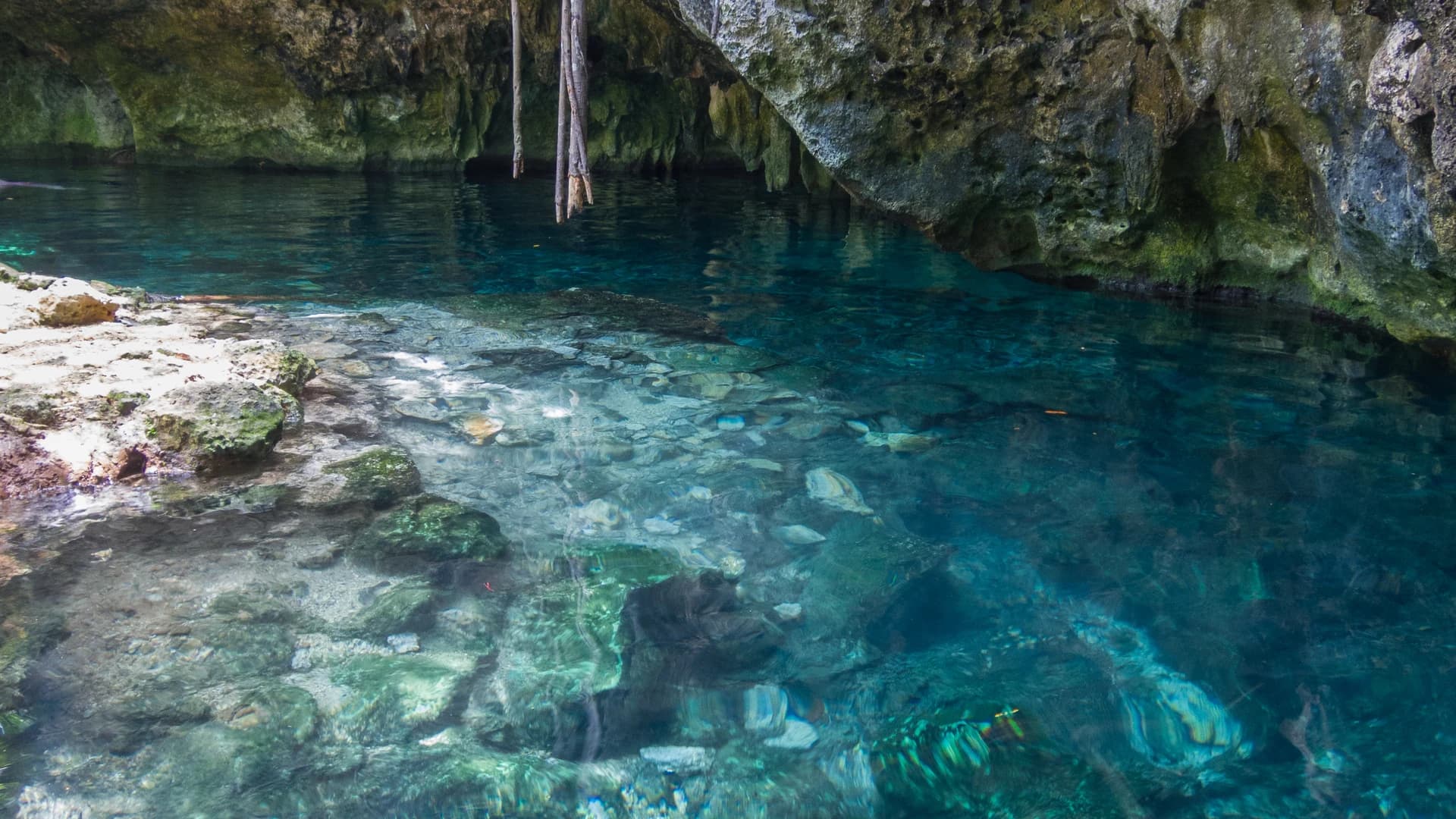
- Semi-open cenotes keep part of the roof, so you swim under an overhang with daylight coming through the gap. Stalactites hang down to the waterline.
- Cave cenotes are mostly enclosed, entered by stairs, lit artificially.
Snorkelers stay in the daylight zone in all three. Going further into the dark requires cavern or cave dive training, and that is a genuinely different activity, not an upgrade.
Water clarity here is the real draw – often 30 m or more, because there is no plankton and no sediment. Where fresh water meets saltwater intrusion you sometimes get a halocline, a shimmering layer that looks like oil on water when you swim through it.
Day pass or guided tour
This is the distinction that decides whether you are getting value, and the listings blur it.
| What you're buying | Roughly | Includes | Doesn't include |
|---|---|---|---|
| Cenote park day pass | ~$23 | Entry, life jacket, a short guided circuit, all-day access | Transport, food, gear beyond a vest |
| Guided cenote tour | ~$29–60 | A guide for the whole visit, sometimes several cenotes | Usually transport; entry sometimes separate |
| Multi-cenote tour with transport | ~$80–165 | Pickup, several cenotes, lunch, guide | – |
| Cenote + ruins combo day | ~$34–90 | Tulum or Cobá ruins plus one cenote, transport, lunch | Cenote time is short |
The combo days are by far the highest-volume products in Tulum, and they are the ones to be careful with: a 10-hour trip that visits ruins, a cenote and a beach gives you perhaps 45 minutes in the water. If the cenotes are the point, book something that only does cenotes.
Sunscreen is banned in most cenotes and the rule is enforced. These are the aquifer, not a pool – there is nowhere for chemicals to go. Expect to shower before entry, and bring biodegradable only, applied well beforehand or not at all.
The famous ones, and whether to bother
Gran Cenote, on the Cobá road, is the postcard: turquoise water, turtles, a semi-open cavern you can snorkel under. It is also timed-entry, capped and busy from mid-morning.
Dos Ojos is the big one, two connected sinkholes over a cave system that runs for tens of kilometers. Snorkelers get the shallow blue basin; divers get the rest.
Kaan Luum is the pale-green lagoon with a deep dark hole at its center, roped off. Shallow enough to stand in around the edges, dramatic from above, thin as a swim.
All three are DIY-friendly – you can taxi out and pay at the gate, which is exactly why paying a premium for a "tour" to them can be poor value. Where a booked tour earns its money is the cenotes you would not find, on private land, with transport included.
When to go
Cenotes are the season-proof option on this coast. Water sits around 24–25°C all year, sargassum is irrelevant, and rain barely matters once you are already wet. When the sea is rough or weedy, this is where to go.
Go at opening. The popular cenotes cap numbers and the light is best mid-morning, when the sun angles into the sinkhole and throws the beams people photograph. By afternoon the light flattens and the queue is real.
Bring a towel, water shoes for limestone, and cash for entry fees – most cenote entries are collected on site, and card acceptance is patchy.
Check cenote pass dates and availability before you close this page – the parks cap daily numbers and the early slots go first.
For salt water instead, Akumal's turtles are 25 km up the coast and Sian Ka'an is the wild lagoon south of town. Reef snorkeling proper is further afield – Puerto Morelos near Cancún or Cozumel. The Mexico water activities index has all of it.
Tulum's private-pool villas are the base for most of this – the guide runs from the beach road to Soliman Bay.
FAQ – cenote tours in Tulum
Images: dronepicr / Wikimedia Commons / CC BY 2.0