There is one distinction that governs everything about diving cenotes, and if you take nothing else from this page, take this: recreational cenote diving is cavern diving, not cave diving. They are different activities with different training, different risk and different rules. Guided cavern dives in the Tulum systems run from about $118 for two tanks, and the safety record of properly guided cavern diving is strong. What goes wrong, goes wrong past that line.
Cavern versus cave, precisely
Cavern diving happens inside the natural-light zone. A guided cenote dive keeps you within sight of daylight and the exit, on a continuous guideline back to open water, inside recreational depth and no-decompression limits, with a certified cenote guide leading. You need an Open Water certification and nothing more. Dos Ojos and Casa Cenote are dived this way.
Cave diving is full penetration – past the daylight, beyond the cavern line, following the permanent gold line into passages that can run for kilometers. It requires a separate, multi-level technical certification, redundant gas, redundant lights and dedicated training that takes months. It is a different sport that happens to use the same holes in the ground.
The search results for "cenote diving Tulum" surface incidents, so it is worth saying plainly what the pattern is. The fatalities in this region overwhelmingly involve two groups: untrained or solo divers who crossed the cavern line into cave passage, and open-water divers taken past what their training covered. Guided cavern diving, done to the briefed limits, is not that activity and does not carry that risk profile.
The practical version for you: do not book a dive that promises to take you "deeper into the cave" unless you hold cave certification, and do not let a guide talk you past the line. A good operator will refuse before you have to.
What a Dos Ojos day looks like
Two dives, roughly 40 minutes each, with a half-hour surface interval and a 30-minute briefing before the first one. The briefing is not a formality here – it covers the guideline, buddy positioning, silt discipline and the turn rules, and it is the reason the day is safe.
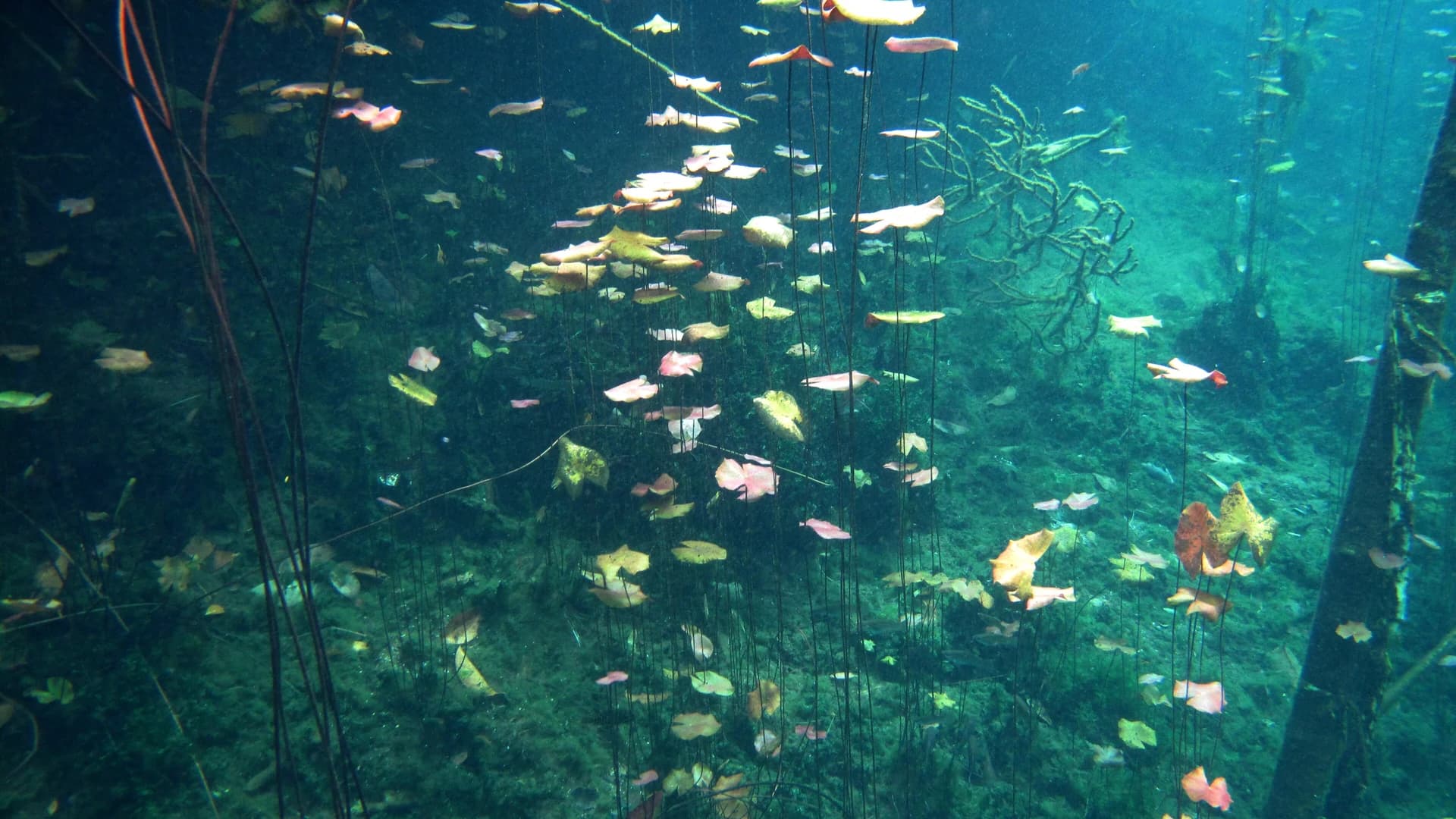
Dos Ojos itself is two connected sinkholes at the mouth of one of the world's largest surveyed cave systems. The classic cavern routes are the Barbie line and the Bat Cave, both inside the light zone. What you get is fresh water at around 25°C, visibility that makes divers look like they are flying, stalactites and columns, and shafts of daylight coming down through the collapses.
It is a completely different experience from reef diving. No current, no fish to speak of, no color – it is architecture and light rather than biology. Divers who love it usually love it for exactly that. If you want reef, Cozumel's drift walls are two hours and a ferry away and are the better use of a day.
What it costs once everything is added
The headline price is not the price, and the extras here are unusually granular.
| Item | Roughly |
|---|---|
| Two guided cavern dives | ~$118 |
| Dos Ojos cenote entry | ~400 MXN, on site |
| Gear rental, per item | ~$5 each – mask, fins, light, BCD, regulator |
| Wetsuit rental | ~$5 short, up to ~$20 for a 7 mm |
A diver arriving with no kit pays roughly $45 to $60 on top once entry, regulator, BCD, light and a suit are added. Bring your own where you can, and bring cash – on-site fees are not card-friendly.
The 25°C water sounds warm and is not, over two dives with no exertion. Most people want a 3 mm suit at minimum; the operator rents up to 7 mm for a reason.
Who can do it
Open Water certification is the floor and it is genuinely required – this trip excludes uncertified divers outright, along with anyone under 15, anyone who has dived in the past 24 hours, non-swimmers and anyone claustrophobic. Bring the physical certification card.
Sites vary in what they demand beyond that. Dos Ojos is the standard cavern introduction and comfortable for a competent Open Water diver. The Pit is a different proposition – it drops well past 30 m and operators generally want Advanced certification for it. If you are newly certified or out of practice, do Dos Ojos first and see how your buoyancy holds up, because silt discipline in an overhead is unforgiving.
Never dived at all? A discover-scuba session in a cenote exists, but honestly the better first tank is in open water. Come back for cenotes once buoyancy is automatic.
When to go
Cenotes dive year-round and are unaffected by wind, swell or sargassum, which makes them the reliable booking when the coast is blown out. Rain can reduce visibility slightly in the days after a heavy storm, but far less than it would at sea.
Morning dives get the light beams – the whole visual point of a cavern dive is sun angling through the collapse, and that is a mid-morning phenomenon.
Check cenote dive dates before you close this page – cenote guides run very small groups, so slots are limited well before the cenote itself fills.
Not certified? The cenote snorkel day covers the same water from the surface for a fraction of the price, and Akumal's turtles are the saltwater wildlife day up the coast. The Mexico water activities index has the rest of the coast, and our guide to Tulum's private-pool villas covers where to stay between dives.
FAQ – cenote diving in Tulum
Images: Bernard DUPONT / Wikimedia Commons / CC BY-SA 2.0