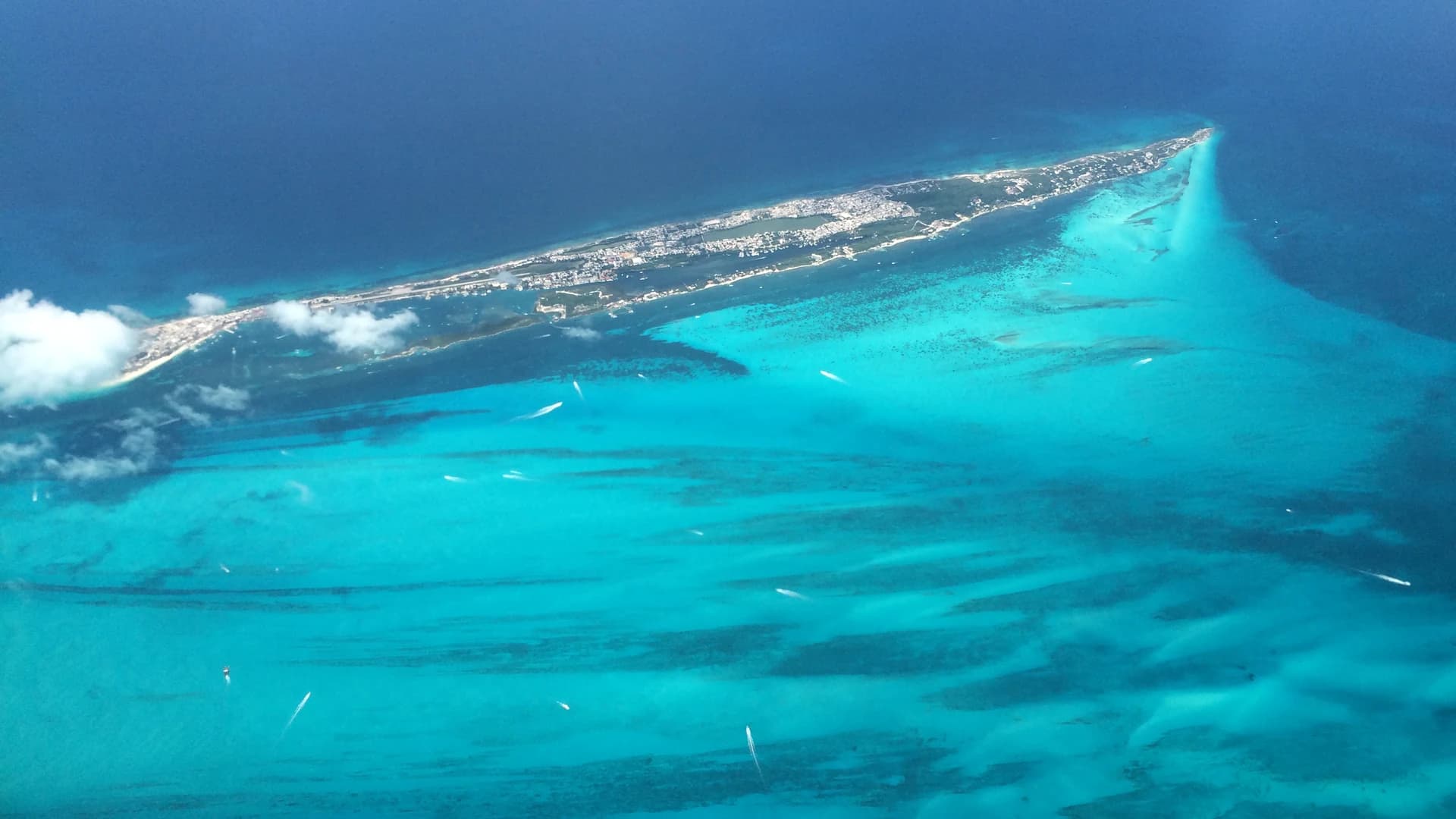
Cozumel's reef starts about 20 minutes offshore, which is why every serious snorkeling tour here is a boat trip and none of them is a bus ride. The standard half-day runs south to Palancar, then finishes in the shallows at El Cielo, and costs around $56 with gear and drinks thrown in. On this island the reef is not a side trip – it is the reason the plane lands.
What the three reefs actually are
Tours here sell "three reefs," and the wording does some work. Two of the three are genuine reef, and the third is not a reef at all.
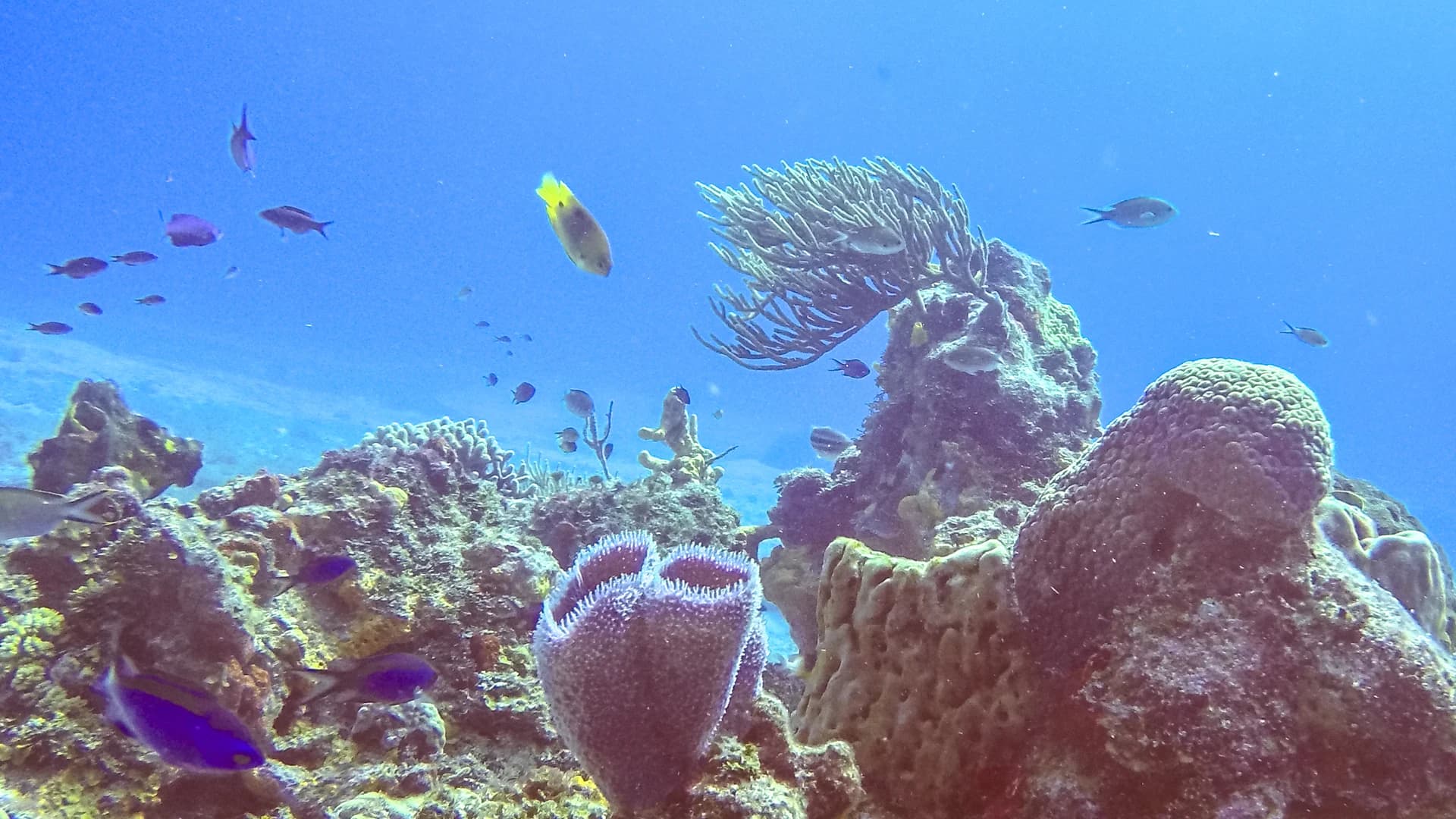
Palancar is the one that matters. It is a several-kilometer system of coral heads and buttresses off the island's southwest shore, cut through with sand channels and swim-throughs, and it drops away into deep blue on the seaward side. Snorkelers stay over the shallow gardens at the top while divers work the wall below. Visibility here routinely runs past 30 m, which is the number Cozumel's reputation is built on.
Columbia sits just south of Palancar, shallower at its inshore end and quieter on boat traffic. Plenty of listings name it in the title. Fewer of them actually list it as a scheduled stop, so read the itinerary rather than the headline.
El Cielo is a sandbar, not a reef – a shallow, pale-bottomed patch where the boat anchors and you can stand up in waist-deep water. It is famous for cushion starfish rather than coral. If that is the part you care about, the El Cielo trips are built around it and give you far longer there.
Which Cozumel snorkel trip to book
Prices cluster tightly, so the choice is really about stop time and group size rather than money.
| Tour | Roughly | Hours | Why you'd pick it |
|---|---|---|---|
| 3 Reefs Boat Tour | ~$56 | 4 | The most-booked trip on the island – Palancar plus a long stop at El Cielo |
| Palancar, Columbia and El Cielo | ~$56 | 4 | Same money, and Columbia is in the billing rather than implied |
| El Cielo and Palancar with ceviche | ~$74 | 4.5 | Capped at 14 people and half an hour longer in the water |
| Turtle Sanctuary snorkel | ~$65 | 4 | Built around turtle bay instead of the reef wall |
The most-booked option is the one above, and its reviews are consistent about what you get: clear water, good guides, ceviche on the boat. They are also consistent about the one complaint – the pace can feel rushed, with roughly 25 minutes at Palancar against a much longer stop in the shallows. If reef time is the point, the smaller-group trips buy you more of it. And if half your group would rather not get in at all, the glass-bottom boat trip is shorter, cheaper and drier, over shallower reefs closer to town.
What the fare covers, and what it doesn't
The ticket includes the boat, guides, gear, a snack and drinks. "With drinks" means beer, bottled water and sodas – not an open bar, whatever the photos suggest.
The $11 marine park fee is per person, cash, paid at the marina – it is excluded from every reef tour on the island, not just this one. Bring small bills. Budget close to $70 all-in for a $56 ticket.
Sunscreen has to go on before you board, and reef-safe is the expectation inside a national park. Bring a towel; the boats carry shade but not much else.
Coming off a cruise ship or over from Playa del Carmen
Cozumel is a port island, and the tour fleet is built around that. The main marina sits five or six minutes by taxi from the Royal Caribbean and Carnival piers, which makes a four-hour reef trip comfortable inside a normal port call – though you are booking against your ship's all-aboard time, not the operator's.
Day-trippers from the mainland ferry over from Playa del Carmen in about 35 minutes. That works, but it turns a half-day into a full one, and you will be watching the return ferry rather than the reef. If you are based in Cancún and want a shorter water day, the Puerto Morelos reef snorkel reaches living coral without a boat crossing, and the MUSA sculpture snorkel covers a completely different kind of site.
When to go
November to April is the dry season and the calmer water. Visibility is good year-round here – the current keeps the water clear even in summer – but wind is what cancels or reroutes a reef trip, and there is less of it in winter.
Morning departures are better. Afternoon wind builds chop on the crossing south, and the light over pale sand is flatter after midday.
Sargassum is a mainland problem far more than a Cozumel one. The island's west coast, where all of this happens, is sheltered, and the reef stops sit well offshore.
Check reef tour dates and availability before you close this tab – boats here fill around cruise-ship schedules, and morning slots go first on port days.
If you would rather be under the water than on it, diving Cozumel is what the island is genuinely famous for. The Mexico water activities index covers the rest of the coast.
FAQ – snorkeling in Cozumel
Images: Matthew T Rader / Wikimedia Commons / CC BY-SA 4.0