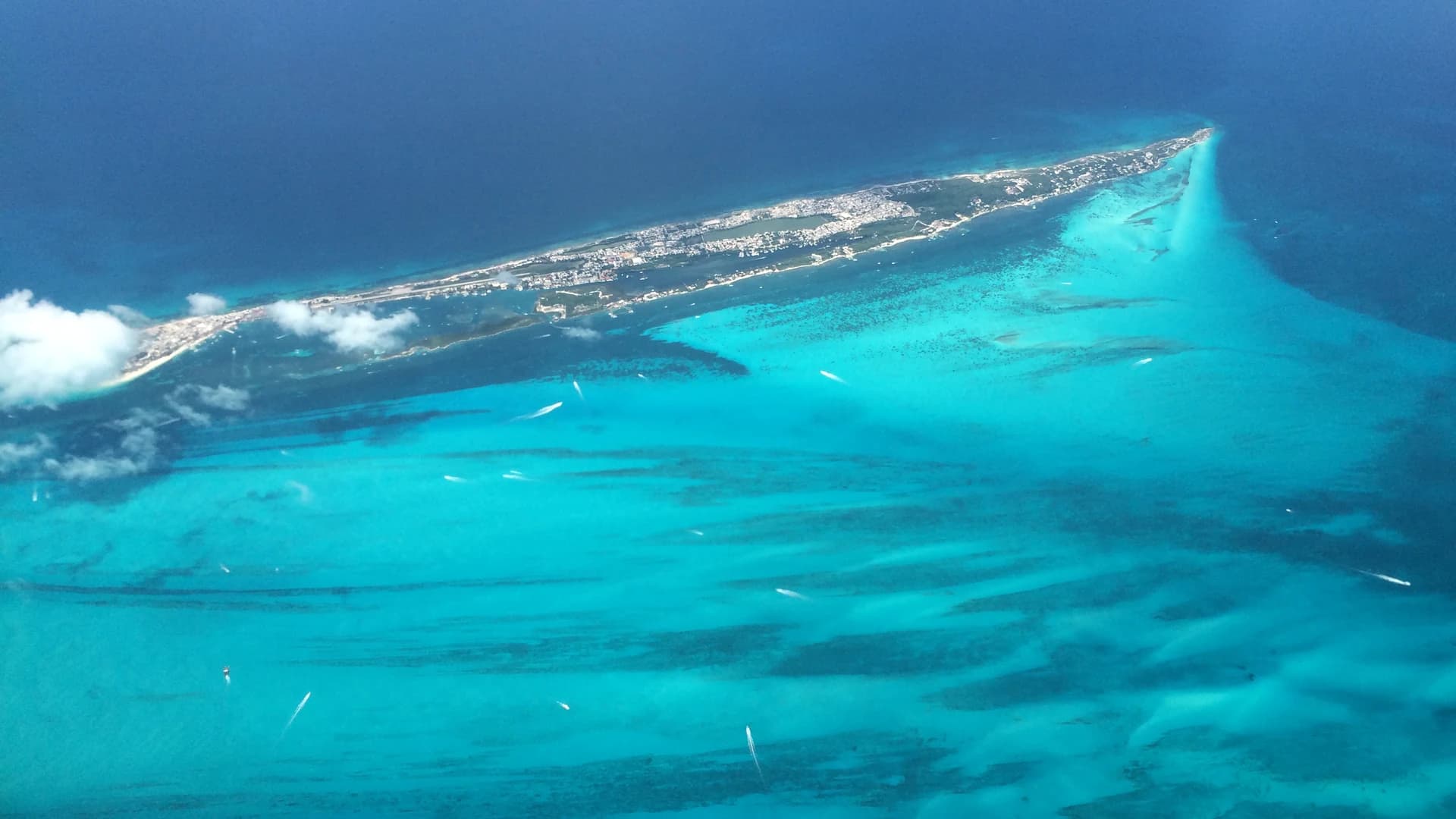
You do not really swim Cozumel. A current runs north along the island's sheltered side at roughly walking pace, so a dive here means dropping in, going neutral and letting the wall travel past you. That is what divers mean when they call this the benchmark for Caribbean drift diving. Certified divers get on a fast boat for it; beginners start shallower, and cheaper, from about $66.
What drift diving here actually means
The Yucatán Current pushes north through the channel between Cozumel and the mainland and rides along the island's leeward reef. Diving with it changes the job description. You are not finning a route and coming back on your air – you are drifting one direction over the wall while the boat follows your bubbles and picks you up wherever you surface.
The practical consequences are worth knowing before you book. Air lasts longer, because you are barely working. Navigation stops being your problem, which is why Cozumel forgives rusty divers. And you cannot turn around, which is why guides brief hard on staying with the group.
Visibility routinely runs past 30 m. That is the number the island's reputation rests on, and it is a product of the same current – it keeps the water flushed and the sediment moving.
Beginner or certified: two very different days
The gap here is wider than most destinations, and it is not only about price.
| You are | Typical trip | Roughly | What you get |
|---|---|---|---|
| Not certified | One-tank dive at Chankanaab | ~$66 | Instructor, all gear, park admission and the rest of the day in the park |
| Certified | Two-tank boat drift dive | ~$170 | Two 45-minute dives on the wall, groups capped at 6, tanks and weights |
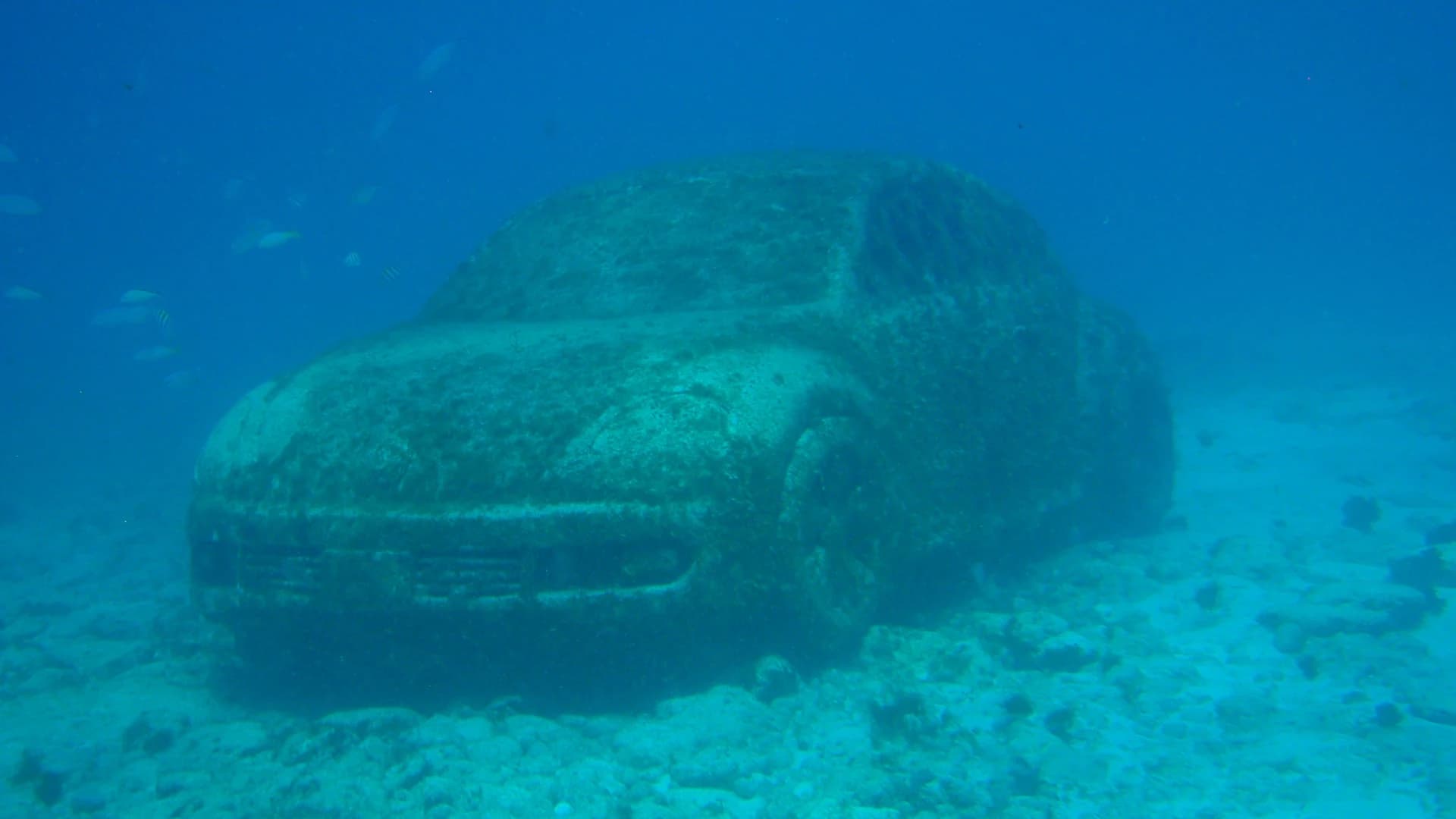
Be clear about what the cheaper option is. Chankanaab is a park dive, not a drift dive – a sheltered, shallow site inside a beach park with caves, sculptures and a resident fish population, entered from shore with an instructor beside you. It is a genuinely good first dive and the park access makes a day of it. It is not the Cozumel that divers talk about.
The two-tank boat trip is that Cozumel. Small groups, a speedboat 20 minutes out, two dives with a surface interval between them, and the wall doing the moving. If you are certified and only doing one dive day on this coast, do this one.
A discover-scuba trip does not carry over. It is not a certification, each operator runs their own version, and if you expect to dive again within a year or two an Open Water course pays for itself quickly.
The wall you came for
The island's reefs sit in a chain along the southwest shore, all inside Parque Nacional Arrecifes de Cozumel.
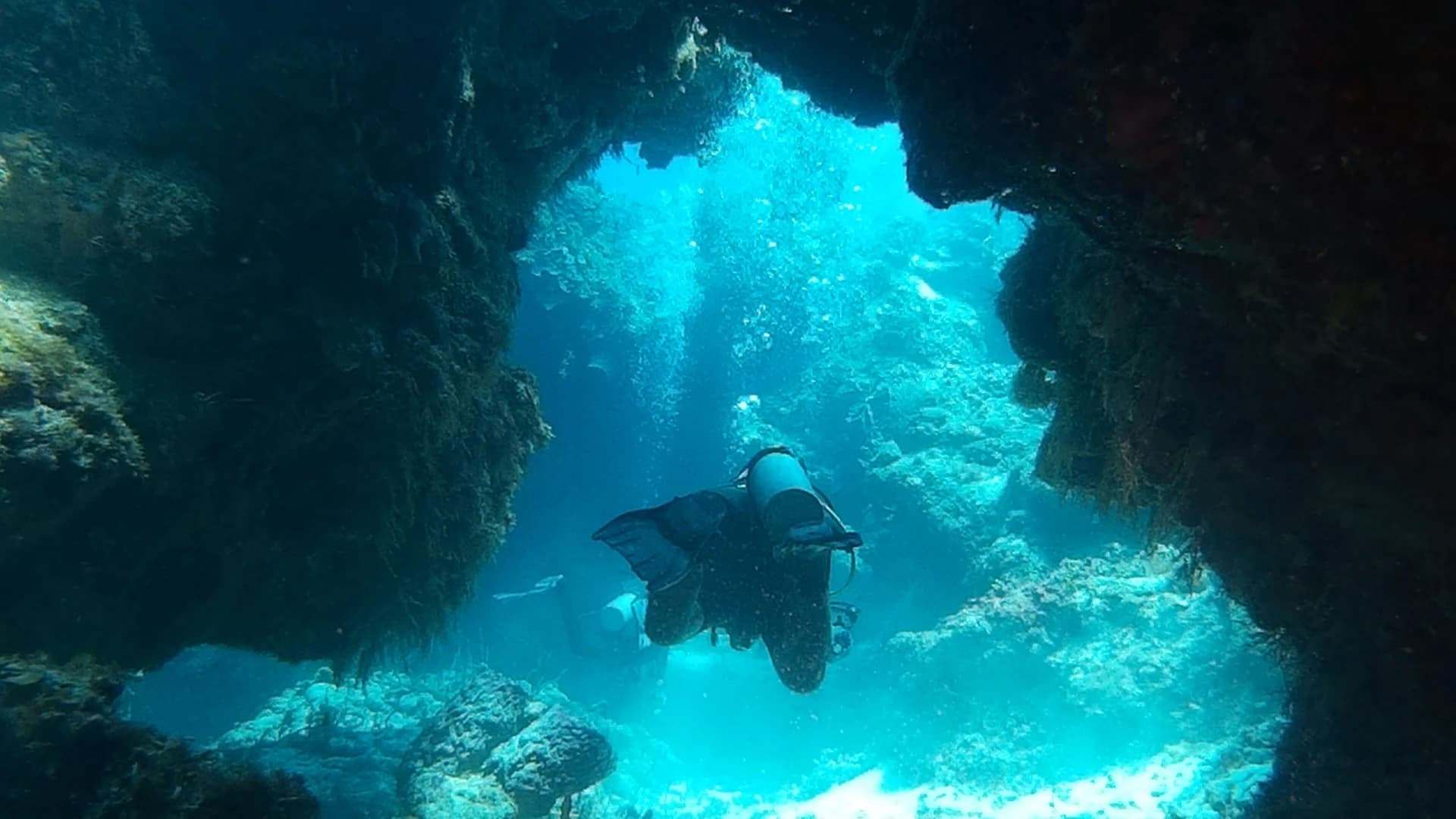
Palancar is the headline – a long system usually split into named sections, with coral buttresses cut by sand channels and swim-throughs you can pass through rather than over. Many operators dive it twice in a day, deeper first and shallower second.
Santa Rosa Wall is the one experienced divers come back for: a near-vertical face starting around 15 m and dropping well past recreational limits, undercut with overhangs and tunnels. It carries more current than Palancar and it is not a first-week site.
Columbia sits at the southern end, with tall coral pinnacles and, on its deep sections, the best chance of turtles and eagle rays.
If you would rather see the top of all this without tanks, Cozumel's reef snorkeling tours cross the same water at a third of the price.
What the fare leaves out
On the certified two-tank trip, tanks and weights are included but dive gear itself is a rental extra, and the park fee there is $12 rather than $11. Bring your certification card – operators do check it.
The marine park fee is charged per person, in cash, on the day, on every dive and snorkel operation on the island. Budget $11 to $12 on top of whatever you paid online.
Neither trip suits everyone: the two-tank boat excludes children under 8, pregnant women and divers with mobility impairments, and both operators rule out anyone with heart problems. If you have not dived in a few years, say so when you book rather than on the boat – a check-out dive is a normal request here, not an insult.
When to go
Diving is year-round, which is unusual and is down to the current. Even in summer the water stays clear.
November to April is calmer and drier, with water in the mid-20s°C – a 3 mm suit or a shorty. May to September is warmer, quieter on the surface and inside the hurricane window that runs to November; when a storm closes the port, boats do not sail.
Book morning departures. Wind builds through the afternoon, and the port authority closes the marina to small boats on rough days – earlier slots are the ones that survive a marginal forecast.
Check dive dates and availability before you close this page – dive boats here run small groups, so morning slots go well before afternoon ones.
Diving from the mainland instead? Cancún's dive scene is shallower and busier but has the MUSA sculpture park, which Cozumel cannot match. For the shallow end of the island, El Cielo is a sandbar rather than a reef. The Mexico water activities index covers the rest.
FAQ – scuba diving in Cozumel
Images: Johnnie Flashlite / Wikimedia Commons / CC BY-SA 4.0