Cancún is not Mexico's great dive destination – Cozumel, down the coast, is, and pretending otherwise wastes your money. What Cancún has instead is a site nobody else can offer: roughly 500 sculptures standing on the seabed at Manchones, about 8 m down, which you can dive without a boat transfer to another island. If that appeals, dive here. If you want walls and drift, go south.
The honest comparison with Cozumel
Cozumel is the benchmark on this coast, and it is not close. Its reputation rests on drift diving along the Palancar wall system with visibility that regularly runs past 30 m, on a channel that funnels current along steep reef. Divers plan trips around it.
Cancún's diving is shallower, flatter and busier. Maximum depth on the standard MUSA and Manchones outing is about 10 m, the reefs are in recovery from decades of heavy traffic, and you share the water with a lot of boats.
So the case for diving Cancún is not that the reef is better. It is that you are already here, and there is one site worth the tanks. If you are staying in Cancún for a week and want two good dives without a day trip to another island, this is the answer. If diving is the reason for the whole vacation, book Cozumel and treat Cancún as the airport.
What the sculptures are actually like to dive
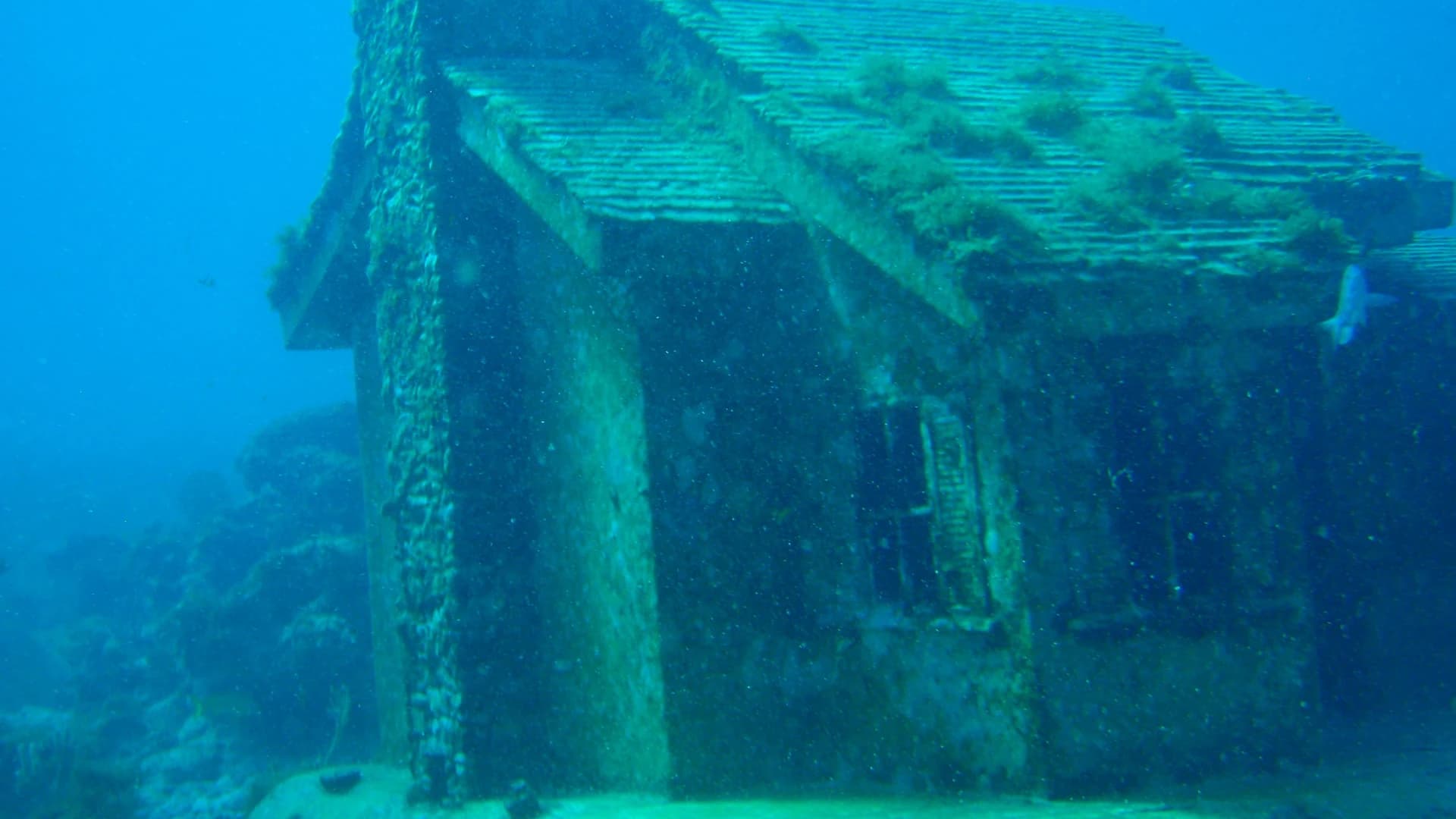
MUSA is where diving beats snorkeling by a wide margin, and the reason is depth. The figures at Salón Manchones stand at roughly 8 m. Snorkelers see them from above as pale shapes; divers move between them.
That changes the thing entirely. Up close you get the coral and sponge growth that has colonized every face and shoulder over more than a decade, the scale of the crowd pieces, the details that do not read from the surface at all. The museum was built as an artificial reef, and the point of it – marine life reclaiming human figures – is only legible within arm's reach.
Most dive itineraries pair MUSA with Manchones Reef itself, a natural coral reef at similar depth, so a two-tank morning gives you one dive of sculpture and one of reef.
If you would rather stay on the surface, the MUSA snorkel tour costs about a third as much and covers the same two sites from above.
Certified divers pay much less
This catches people out, so it is worth stating plainly: the beginner option is the expensive one.
| You are | Typical trip | Roughly | What you get |
|---|---|---|---|
| Not certified | Discover scuba, MUSA + reef | ~$165 | Theory class, pool session, then 2 ocean dives to 10 m |
| Certified | 2-tank MUSA + Manchones | from ~$98 | Straight to the boat, 2 dives, reef fee included |
| Certified, want more | 2-tank with site choice | ~$163 | Adds Punta Cancún reefs (15–17 m) or the C-58 wreck (25 m) |
The gap is instruction time. A discover-scuba day includes a theory class and a training dive in a pool before you touch the ocean, plus an instructor working at close ratio. That is most of the cost, and it is the right way to do a first dive.
A discover dive is not a certification. It does not carry over to the next trip, and each operator will run you through their own version again. If you expect to dive more than once or twice, an Open Water course pays for itself quickly.
For certified divers, the deeper options are where Cancún gets more interesting: the Punta Cancún reefs run 15–17 m, and the sunken C-58 and C-55 vessels sit around 25 m.
The fees that are not in the price
On the beginner MUSA dive, the marine park fee of 500 Mexican pesos (roughly $25–30) is paid separately, and hotel transport is an optional add-on rather than an inclusion. Budget close to $200 all-in. Some certified-diver trips handle this differently – one includes a $20 reef preservation fee in the ticket – so check per listing rather than assuming.
Beyond that, dive gear, tanks, weights and a certified guide are included across these options, and wetsuits are generally available. Bring your certification card if you have one; operators do ask for it.
When to go
November to April is the dry season and the better diving window, with calmer seas and the clearest water. Visibility matters more on the MUSA dive than on a normal reef dive, because the sculptures are worth seeing at distance as well as up close.
Water is warm enough year-round that a shorty or a 3 mm suit covers most people. Summer brings warmer water and lower prices along with the hurricane window from June to November.
Dive in the morning. Afternoon wind builds chop and stirs the bottom, and the sites sit close enough to shore and to boat traffic that the water degrades noticeably as the day goes on.
Check availability and dive dates before you close this page – dive boats run small groups, so morning departures fill well ahead of afternoon ones through high season.
If you want water time without tanks, the Puerto Morelos reef snorkel is the cheapest way onto living coral near Cancún. For a base near the dive marinas, our guides to Cancún's swim-up rooms and beachfront resorts cover the hotel zone, and the Mexico water activities index has the rest of the coast.
FAQ – scuba diving in Cancún
Images: Andy Blackledge / Wikimedia Commons / CC BY 2.0