Bioluminescent plankton glow because movement in the water triggers a chemical reaction inside the organism, and no operator can guarantee you will see it on a given night. Brightness depends mostly on how dark the sky is, which makes moon phase the one variable you can actually plan around. Book a date near the new moon, treat the glow as the upside, and pick a trip you would still enjoy without it.
What the glow actually is
The light comes from dinoflagellates – single-celled marine plankton – most commonly Noctiluca scintillans, whose name translates as "glowing bright by night" and which is known in English as sea sparkle. It is one of the most widespread bioluminescent organisms in coastal water anywhere in the world, not a Thai curiosity.
The mechanism is well documented. Mechanical disturbance – a paddle, a hand, a boat wake – triggers an electrical signal across the cell, which releases protons and drops the internal pH from about 8 to about 6. That acid shift changes the shape of the enzyme luciferase and switches it on, and the reaction with luciferin gives off light. Each individual flash lasts roughly 80 milliseconds, which is why the water appears to sparkle in bursts where it is disturbed rather than glowing steadily.
The practical implication is the useful part: the plankton only light up where something moves them. You see the glow trailing off a paddle blade, off your fingers, off the hull – not spread evenly across the bay like a lit swimming pool. Photographs suggesting otherwise are long exposures.
Why nobody can promise you the glow
The single biggest factor is darkness, so the moon decides your odds. Bioluminescence is faint. On a night near the full moon, moonlight on the water washes it out even when plankton are present in the same numbers. On the nights around a new moon, the same water can read as clearly luminous.
Check a lunar calendar for your travel dates before you book, and choose a departure within a few days either side of the new moon. That one decision does more for your chances than choosing between operators.
The other variables are outside anyone's control. Plankton concentrations shift with currents, water conditions and time of year, and they are not consistent night to night in the same spot. An honest operator describes the plankton as conditions-dependent; one that guarantees the sighting is overselling. Read recent reviews for the specific months you are traveling rather than the overall rating, and go in expecting a good night on the water with a strong chance of the glow rather than a certainty.
It runs from afternoon to night, not just after dark
Worth knowing before you plan the day around it: this is roughly an eight-hour trip that leaves in the afternoon and returns late, not a short evening paddle. A typical schedule departs Phuket in the early afternoon and gets back around 22:00.
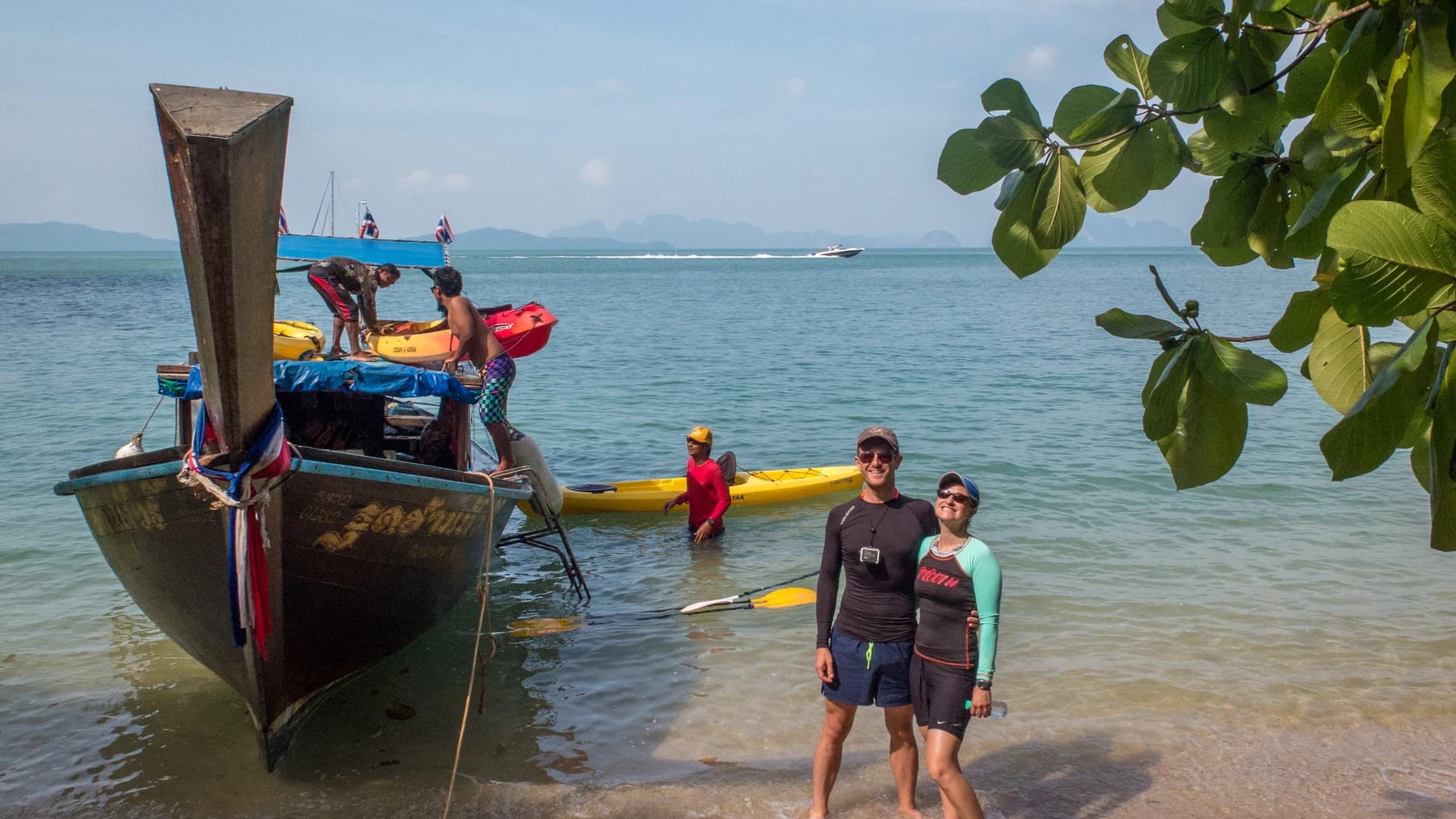
That structure exists because the plankton stop has to wait for full darkness, and the operators fill the daylight hours before it with the bay's normal program. The route covers Koh Panak, Hong Island and James Bond Island – meaning you canoe into the sea caves and enclosed lagoons in daylight, watch the light go, and finish with the plankton stop after nightfall.
So the day is genuinely two products in one. That is a good thing if you have not already done Phang Nga Bay, and a redundancy if you have – see the comparison below.
The two night trips worth comparing
| Bioluminescent Plankton and Sea Canoes | Twilight Sea Canoe and Glowing Plankton | |
|---|---|---|
| Price | about $122 | about $92 |
| Booking volume | the higher of the two | strong |
| Rating | consistently well reviewed | marginally higher |
| Structure | afternoon caves, then the plankton stop | weighted toward the twilight and night portion |
Book the flagship trip above if this is your only Phang Nga Bay day. It gives you the caves, the lagoons and the night stop in one booking – a full day rather than a twilight slice, which is worth paying more for if you have not seen the bay in daylight.
Book the roughly $92 twilight version if you have already done a Phang Nga Bay day trip and just want the night stop without paying for the same caves twice. It is also the cheaper of the two, so if budget is the deciding factor and you do not need the full day, this is the one.
Where it fits among Phuket's water days
Phang Nga Bay gets sold three separate times from Phuket, and the differences are the hour and the boat rather than the islands. The James Bond Island longtail day trip is the cheap daylight version, the luxury sunset cruise is the same bay in evening light from a catamaran, and this one carries on into the dark. Pick one of the three, not two.
The genuinely different days are elsewhere: the Phi Phi Islands trip for open-water beaches and snorkeling, the Similan Islands for the best underwater conditions within reach, and Discover Scuba Diving at Racha Yai if you want to breathe underwater without a certification.
If your dates include a new moon, book the night canoe above for one of those dates and build the rest of the week around it – the moon will not move for you, and the other five trips run fine on any night.
For the late return, staying on Phuket's northern or eastern side shortens the drive back. Our guides to the island's private pool villas, swim-up rooms and beachfront resorts cover which resorts sit where.
FAQ – bioluminescent plankton tours from Phuket
Images: Weldon Kennedy from London, UK / Wikimedia Commons / CC BY 2.0