Parasailing is the most expensive water activity in Boracay and the shortest. The flight itself runs about 15 minutes, and at roughly $29 per person it costs about double a half-day island hopping trip. That arithmetic looks bad until you see what the ticket actually contains – a speedboat transfer, a floating station offshore, and the only view of the island nobody gets from a boat.
Where it launches, and why that matters
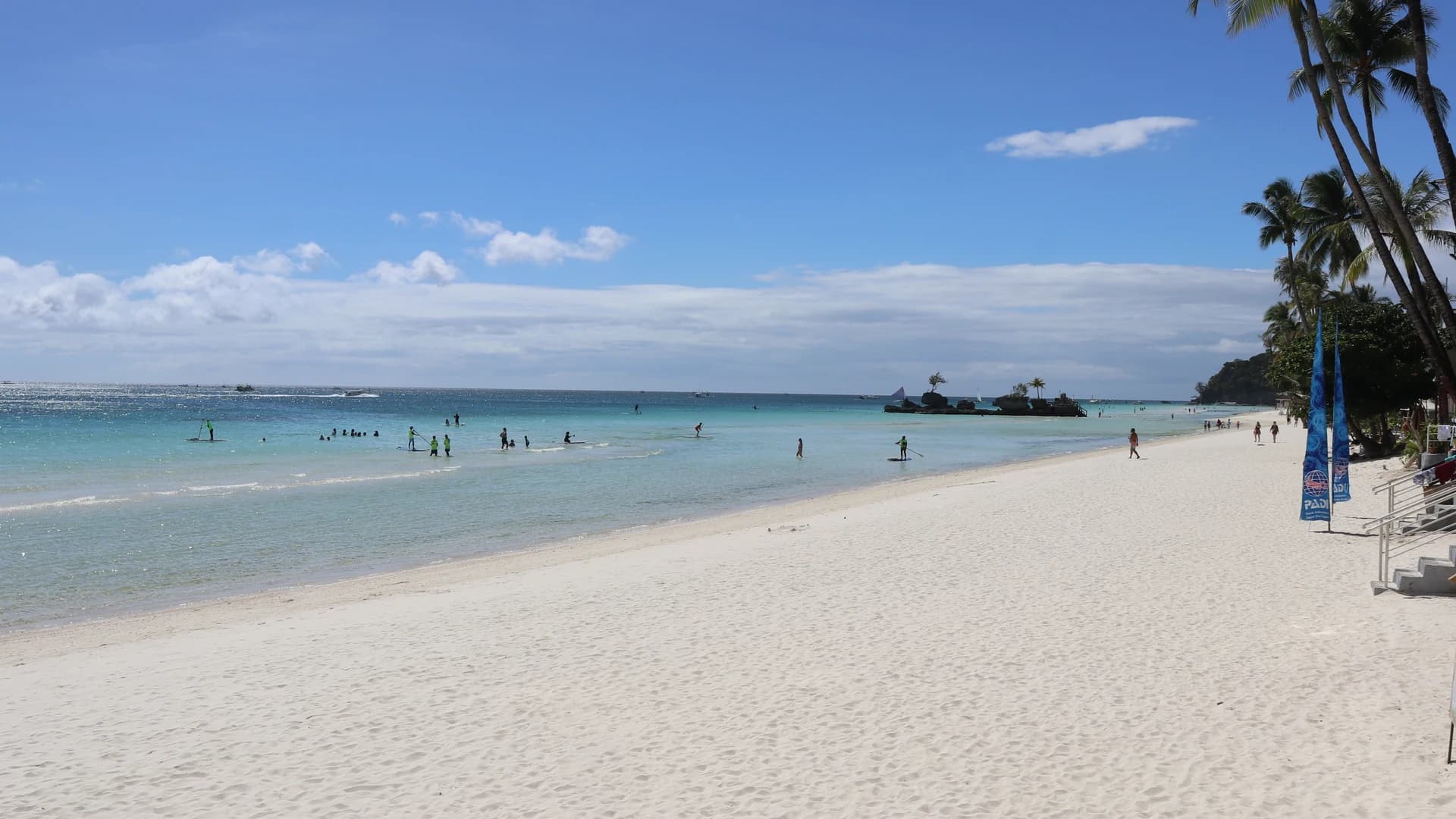
Boracay parasailing launches from the White Beach side, most commonly around Boat Station 1, rather than from Bulabog on the east coast. You do not take off from the sand. A speedboat runs you out to a floating water-sports station moored offshore, you fly from there, and the same boat brings you back.
This is worth stating plainly because the assumption runs the other way. Bulabog is Boracay's wind-sports beach – kitesurfing and windsurfing live there, drawing steady cross-shore wind through the Amihan months from about November to April. Parasailing wants the opposite conditions. It needs manageable water for the boat and predictable air, which is the calm west side, the same coast the island hopping boats and sunset cruises work from.
So the seasonal logic does not invert the way you might expect. Motorized water sports follow the calm water, and in Boracay that means they broadly track the same pattern as the boat tours: best on the west side during Amihan, and shifting east toward Bulabog during the Habagat months of roughly June to September, when the southwest monsoon pushes weather onto White Beach.
What the fifteen minutes include
The product is a short flight wrapped in a longer errand, and the price covers the whole errand.
| Included | Notes |
|---|---|
| Speedboat transfer to the offshore station | part of the experience, not overhead |
| About 15 minutes airborne | the flight itself |
| Life jacket and harness | provided, not rented separately |
| English and Tagalog-speaking crew | standard on the main operators |
| Hotel pickup | on some listings, not all – check |
Operators advertise flights at roughly 100 to 150 m above the water, though the working height on any given flight depends on wind and boat speed, so treat the figure on a listing as a ceiling rather than a promise.
You do not get wet unless you ask to. Crews will usually dip you toward the water at the end of the flight if you want it, and will keep you dry if you do not. Say which you want before you go up, because it is difficult to negotiate at 120 m.
Solo or tandem, and how to choose
This is the only real decision in the booking, and it changes the experience more than the price does.
Fly tandem if you are with someone. Two harnesses under one canopy is the sociable version, it is calmer because the canopy is more heavily loaded, and it means somebody is holding the camera. Operators typically cap the combined weight at around 200 kg for a tandem flight.
Fly solo if the point is the flight. Alone under the canopy you get the quiet – the boat noise falls away and the only sound is the harness – and the ride is livelier because there is less weight on the rig. Solo flyers usually need to be under roughly 100–120 kg, again operator-dependent.
Children generally fly tandem with an adult, with most operators setting a minimum age somewhere around 7 to 10 years, and the activity is not offered to pregnant travelers. Weight and age limits vary between operators, so confirm yours on the listing rather than turning up and finding out.
Is it worth double the price
Honestly, it depends what you are comparing it to, and the comparison people make is usually the wrong one.
Against a half-day boat trip it looks poor value – around $29 for fifteen minutes versus about $14 for five hours on the water. On a per-minute basis nothing on the island is more expensive.
Against the other short thrill activities it is competitive, and that is the honest comparison. Helmet diving puts you on the seabed for about 15 minutes at roughly $13, and a jet ski session starts at about $37 for a ride inside a marked zone. Parasailing sits between them and delivers the one thing neither can: altitude, and the view of Boracay's whole west coast as a single shape.
Book it if you want that view and you accept you are buying a moment rather than an afternoon. Skip it if you are optimizing for hours on the water, in which case the island hopping tour is the better ticket and costs half as much.
Where it fits in a Boracay week
Boracay's thrill activities are all short, which is a feature – you can fit two of them into one morning. Parasailing gives you the island from above, helmet diving gives you the seabed without needing to swim, and the jet ski gives you the throttle. They run from the same stretch of coast and several operators sell them as a combined package, which is usually cheaper than booking three separately.
The boat trips are the other half of the island: island hopping by day, and either a sunset cruise or paraw sailing in the evening.
If you are booking one thing from the air-and-throttle group, make it the parasailing flight above – it is the one you cannot approximate any other way, and fifteen minutes is long enough for it to register.
For where to stay along that coast, our guides to Boracay's private pool villas, swim-up rooms and beachfront resorts cover which stations sit where on White Beach.
FAQ – parasailing in Boracay
Images: Patrickroque01 / Wikimedia Commons / CC BY-SA 4.0